
RCS (Chat) may finally push carriers to give us the plans we really want

Image result for google rcs chat
IMAGE: TechAdviser.co
When The Verge first released its exclusive analysis on the future of Google messaging including the seeming death of Allo, the branding of Chat, and the push toward RCS, I did not think too much of it. After all, I had been reading about Rich Communication Services as the successor to Short Message Service for years; the popularity of apps such as WhatsApp, Messenger, and iMessage showed that people loved the feeling of more personalized messages. Uncompressed pictures and stickers were just the beginning of what RCS was capable as in-thread boarding passes started to become a reality.


Unfortunately, as is always the case, carriers and companies could not agree on a profile for universal RCS leading to no direction and no adoption; Apple sitting comfortably on the outside with the exclusivity of iMessage did not help the matter either. However, Google with Chat seems to have put RCS back on track. As noted in the article, many carriers and manufacturers have finally agreed on a profile putting the adoption of RCS in to the realm of possibility; it is worth noting that, for the most part, the US is the only one still riding SMS as the primary "texting" app.

Image result for rich communication services
IMAGE: Questechie
I know, I know; we are probably years off from full adoption of RCS. But, within the realm of forward-thinking, I wonder how current carrier plans will change. For instance, while unlimited has made a huge comeback (thanks un-carrier), most plans consist of a limited data amount with unlimited talk and text (SMS/MMS). This means that customers can call and text as much as they want while having limited amount of data for uses such as browsing, shopping, or video chatting, and these plans work well currently because people can call and text. However, that works because "texting" as we know it uses SMS which is limitlessly free.

But what happens when RCS is the main type of "texting"?

If you didn't already know or guess, RCS messages are sent using data, much like Messenger, unlike SMS messages. With that in mind, if RCS becomes the default standard and plans do not adjust, there will be plenty of pissed off customers that are out of data from texting while getting an unlimited allotment of messages they can no longer use (Android Messages will use RCS by default). This makes me think that if/when RCS becomes the default, universal texting profile, we may see a change in mobile plans.
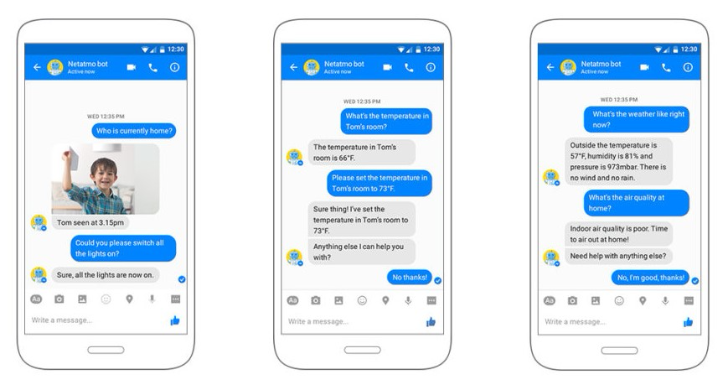
Image result for facebook messenger
IMAGE: Android Police

Quite honestly, I wish plans would change right now; I would gladly have a very limited number of SMS with unlimited data and call for the price I am paying now. If that were the case, I would use another messenger and be content. Unfortunately, that is not the case currently, but I do see a future in which that may become the norm.

People seem to be flocking to apps such as WhatsApp, Messenger, and iMessage at a substantial rate making SMS less relevant. In the day of RCS, SMS will have no relevance (nor even exist). When people think of texting, they will actually be thinking of RCS rather than SMS as they do now. SMS has only survived this long because it is the only true cross-platform messaging standard. Not everyone has WhatsApp, Allo, iMessage, or Messenger, but they do have SMS. Regardless of carrier, manufacturer, or operating system, SMS will work. But, the technology is so antiquated and limited that it does not belong in the same era of today's mobile devices; that is why Google, through Chat, is pushing towards a new standard of messaging that is both appropriate for today's standards as well as reliable for universal use.

RCS and Chat are the future of "texting"; SMS has simply come to the end of relevance. At some point, carriers will also need to realize this so I definitely wonder the plans of tomorrow will look like. Will we finally start seeing carrier plans we actually want: unlimited calls and data standard.

Comments

Popular posts from this blog

Where do tablets belong?

Last night, I had a sudden thought: where does my tablet belong in my tech life? I have always loved the thought of having a need and purpose for every piece of technology I own. For instance, my computer does all of my heavy lifting (photo and video editing) while my phone does all of communicating and daily living tasks. My Chromecast ? That is for tossing music and videos to my TV. Google Home Mini ? What a great little assistant for quick information and getting my day started. I use my Xbox for gaming while my Huawei Watch gives me quick updates and almost-hands-free communication. So, where does my Kindle come in? I originally bought my Kindle Fire to be a consumption device and makeshift pseudo-laptop as mine is not very portable. I thought I would use it for all of Netflix watching as I moved about the house as well as for reading plenty of books; I even intended it to be useful to bang out a quick blog post or article. We probably had a great relationship at first...and ...

Digital well-being is the trend of the year

Digital well-being is this year's buzzword With the keynote of WWDC officially over, it is safe to say one thing: digital well-being is the trendy topic of the year. I/O last month and WWDC have demonstrated that the key players in mobile devices (seemingly) want you to put your phone down. However, which company has the right idea in how to do it? Both iOS 12 and Android P have showcased coming features to address "digital well-being". For all intents and purposes, these words just mean that Apple and Google "want" you to spend less time on your phone; at least, that is the image they are portraying. Both iOS and Android offer new dashboards Now, how are they both doing it? While they differ in the approach, they have very similar tools. For instance, both operating systems will allow you to set timers on apps so that you can spend as much or as little times in those apps as you choose. If you go over, you get shut out of the app. In additio...

In-display sensors or facial scanners: which will take off?

The fingerprint sensor may be moving back to the front...under the screen. Could this be the next big trend in mobile technology (see previous entry about current trend)? Or, will companies move the Apple way and opt for facial recognition for security? With the debut of the iPhone X, Apple shifted away from the fingerprint sensor and debuted FaceID. Utilizing (arguably) some of the most advanced cameras and sensors, the iPhone X negated the need for fingerprint, bio-metric security by using 3D facial recognition to verify identity. In doing so, the home button vanished from the iPhone along with the ability to scan fingerprints. Several months later, at CES, Vivo demoed the first phone using in-display fingerprint scanner technology ; the idea being to remove bezels on the front as well remove the sensor from the back of the body. Prior to CES, many believed that Samsung would be the first to debut the technology, but they were held back by mass-producing and technological restra...